
Whole Cardamom Pods vs Cardamom Capsules is a freshness question with two different answers. In the kitchen, people often prefer whole pods because cardamom aroma fades faster after grinding. In supplement use, the buyer is not grinding pods into chai or dessert. The buyer is checking a sealed bottle, capsule powder, smell, dryness, clumping, expiration date, storage conditions, and label clarity.
That difference matters. Whole pods protect aroma for cooking. Capsules protect a measured serving format for supplement use. One is judged by culinary fragrance after crushing. The other is judged by product integrity, seal condition, dryness, capsule quality, and label information. Secrets Of The Tribe treats this as product-literacy work: freshness does not mean the same thing in a spice jar and in a supplement bottle.
This article does not provide medical advice. Cardamom capsules, powders, extracts, teas, tinctures, and supplements are not intended to diagnose, treat, cure, or prevent digestive issues, metabolic conditions, blood sugar problems, inflammation, infections, respiratory conditions, or any disease. If you are pregnant or breastfeeding, under 18, taking medication, preparing for surgery, managing a health condition, or unsure whether cardamom supplements are appropriate for you, ask a qualified healthcare professional before use.
Why Are Whole Cardamom Pods Often Considered Fresher?
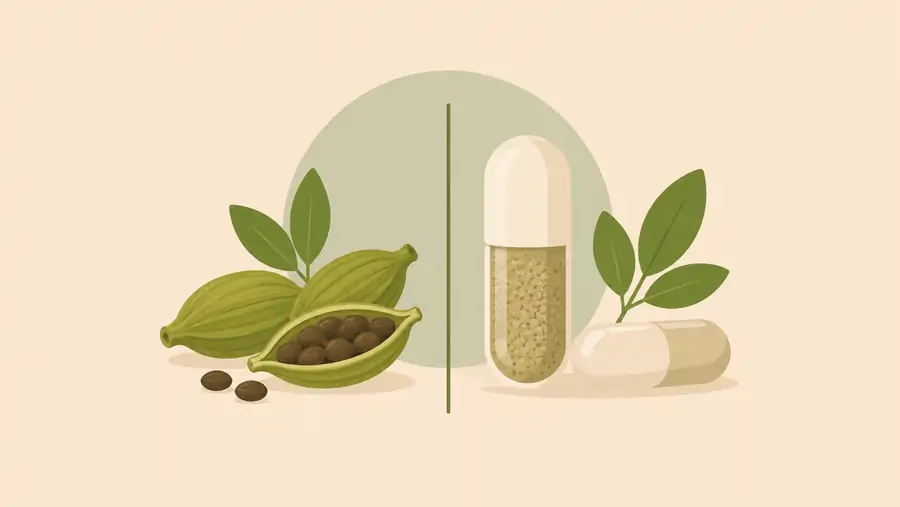
Whole cardamom pods are often considered fresher in cooking because the pod helps protect the seeds inside.
Cardamom gets much of its appeal from aromatic volatile compounds. Once seeds are removed, crushed, or ground, more surface area meets air. Aroma can fade faster. That is why cooks often crush pods shortly before use.
This kitchen rule is useful, but it does not fully explain capsule freshness.
Why Cardamom Capsules Use Different Freshness Logic
Cardamom capsules are not judged like loose kitchen spices.
A capsule buyer should look at seal condition, storage, moisture, clumping, odor, expiration date, lot number, capsule integrity, and label details. The powder is enclosed inside capsules and stored in a bottle, so the freshness question shifts from “How aromatic is it when crushed?” to “Is the product intact, dry, clean, labeled, and within date?”
Capsules are a supplement format, not a spice-grinding format.
Whole Pods vs Capsules: Freshness at a Glance
| Freshness Question | Whole Cardamom Pods | Cardamom Capsules |
|---|---|---|
| Main use | Cooking, brewing, grinding, spice blends | Swallowed supplement format |
| Freshness clue | Strong aroma when crushed | Intact seal, dry capsules, normal smell, valid date |
| Main risk | Loss of aroma after grinding | Moisture, clumping, damaged capsules, expired product |
| Storage goal | Protect volatile aroma compounds | Protect product integrity and dryness |
| Best check | Crush and smell before cooking | Check label, seal, bottle, odor, texture, and date |
Why Grinding Changes Cardamom Aroma
Grinding exposes more of the spice to air. That can make cardamom smell stronger at first, then fade faster over time.
Whole pods slow that process because the seeds remain protected until the pod is cracked. This is why freshly crushed green cardamom can smell brighter than old ground cardamom.
In cooking, freshness is often about aroma release at the moment of use.
Why Capsules Do Not Need to Smell Like Freshly Crushed Pods
Cardamom capsules may smell mild when you open the bottle. That does not automatically mean they are stale or poor quality.
The powder is enclosed inside capsule shells. The bottle may also limit aroma release. A capsule product is not designed to fill the kitchen with scent the way crushed pods do.
A mild smell can be normal if the capsules are dry, intact, sealed, and within date.
Why Capsule Shells Change the Aroma Experience
Capsule shells create a physical barrier. They hold powder or extract inside and reduce direct contact with air, tongue, and nose.
This makes capsules convenient, but it also reduces the sensory drama of the spice. You may smell cardamom lightly from the bottle, not strongly from each capsule.
Do not judge capsules only by culinary aroma memory.
Why Moisture Is a Bigger Problem for Capsules
Moisture can damage capsule quality. It may cause softening, sticking, clumping, swelling, discoloration, odor change, or microbial concerns.
Whole pods can also be damaged by moisture, but capsules give different warning signs. Sticky capsules, wet powder, clumped material, or moisture inside the bottle should not be ignored.
Dryness is one of the most important capsule freshness checks.
Normal vs Concerning Signs in Cardamom Capsules
| Observation | Often Normal | Concerning |
|---|---|---|
| Smell | Mild spice aroma, sweet, herbal, warm, lightly earthy | Moldy, rancid, sour, damp, chemical, rotten |
| Capsule texture | Dry, intact, firm, separate capsules | Sticky, wet, swollen, cracked, leaking |
| Powder appearance | Fine powder if capsule breaks accidentally | Visible mold, wet clumps, strange discoloration |
| Bottle condition | Clean, dry, tightly closed | Moisture inside, broken seal, leaking cap |
| Date | Within expiration date | Expired or unreadable date |
Why Clumping Matters
Clumping can mean different things depending on the product. A tiny amount of powder movement inside a capsule is not a problem. Capsules sticking together in a bottle is different.
Clumping may suggest moisture exposure, poor storage, damaged capsules, or bottle handling issues. If capsules are sticky, damp, swollen, or hard to separate, do not use them.
Clumping is more important than whether the bottle smells like freshly opened spice pods.
Why Seal Condition Comes First
The seal is the first freshness and integrity check for capsules.
A new supplement bottle should arrive with an intact seal or tamper-evident feature if the product uses one. If the seal is broken, missing, loose, punctured, or suspicious, do not use the product.
A strong cardamom smell cannot make a broken seal acceptable.
Why Expiration Date Matters More Than Aroma Alone
Spices can lose aroma before they become unsafe. Supplements add another layer because the label gives an intended use period.
A cardamom capsule bottle may still smell slightly spicy after the date, but that does not mean it should be used. Expiration date, storage, seal, and capsule condition all matter together.
Do not use aroma as the only decision point.
Why Lot Number Matters
A lot number helps the company track a production batch.
If a bottle has an unusual smell, damaged capsules, unclear labeling, or a quality concern, the lot number helps customer support investigate. It is also useful if a company issues a product notice.
A bottle without clear batch information is harder to evaluate.
Why Storage Conditions Change Freshness
Storage affects both whole pods and capsules, but the risk pattern differs.
Whole pods lose aroma when exposed to air, light, heat, and time. Capsules can also lose quality if exposed to heat, moisture, sunlight, or repeated bottle opening in humid air.
Keep capsules tightly closed, dry, and away from direct heat or light unless the label says otherwise.
Where Not to Store Cardamom Capsules
Do not store cardamom capsules in a hot car, sunny windowsill, bathroom, damp kitchen shelf, or near a stove.
Heat can affect aroma and capsule quality. Moisture can damage capsules. Light and air can affect stored botanicals over time.
A cool, dry cabinet is usually a better choice.
Why Whole Pods Still Win for Cooking Aroma
If your goal is flavor in chai, coffee, rice, desserts, or spice blends, whole pods usually offer better culinary control.
You can crush them when needed and release aroma at the right moment. You can also toast or simmer them depending on the recipe.
Capsules are not built for this purpose. They are not a replacement for whole pods in cooking.
Why Capsules Can Still Be Practical
Capsules can be practical because they are portable, pre-portioned, less messy, and easier for people who do not want to taste the spice directly.
That convenience comes with a tradeoff. You lose the fresh-crush aroma and kitchen flexibility of whole pods.
Freshness for capsules is about product condition, not cooking performance.
Why Opening Capsules for Cooking Is Not the Same
Opening capsules to use the powder like spice may seem logical, but it is not the same as using culinary cardamom.
Capsules may contain extract, excipients, capsule-shell residue, anti-caking ingredients, or a powder not intended for recipe use. The serving size may also differ from kitchen measurements.
Use culinary pods or ground cardamom for cooking unless the product label clearly supports food use.
Why Green vs Black Cardamom Still Matters
Whole Cardamom Pods vs Cardamom Capsules is not the only question. Green vs black cardamom also matters.
Green cardamom usually refers to Elettaria cardamomum and has a bright, sweet, citrusy, floral profile. Black cardamom often refers to Amomum species and has a smoky, earthy, savory profile.
If the capsule label says only “cardamom,” ask which botanical material is used.
Why Botanical Name Matters on Capsule Labels
A clear cardamom capsule label should identify the botanical name, such as Elettaria cardamomum for green cardamom or a specific Amomum species for black cardamom.
The label should also identify plant part, format, serving size, other ingredients, warnings, storage directions, expiration date, and lot number.
Secrets Of The Tribe takes a cautious editorial stance here: a capsule bottle should be judged by label clarity and product integrity, not by spice-jar assumptions.
How to Check Cardamom Capsules Before Use
Inspect the bottle before taking anything. Check the seal, cap, label, expiration date, lot number, smell, capsule dryness, and whether capsules are loose and separate.
Do not use the product if it smells moldy, rancid, damp, chemical, or rotten. Do not use it if capsules are wet, swollen, sticky, leaking, or visibly contaminated.
When in doubt, contact the brand before use.
Whole Cardamom Pods vs Cardamom Capsules Checklist
Use this checklist when comparing culinary cardamom pods with cardamom capsules. The goal is to judge each format by the right freshness signals.
Separate Cooking From Supplements
Whole pods are judged by culinary aroma. Capsules are judged by label clarity and bottle condition.
Check the Seal First
Do not use capsules if the seal is broken, missing, loose, punctured, or suspicious.
Smell for Spoilage
Mild spice aroma can be normal. Moldy, rancid, damp, chemical, or rotten odor is not normal.
Look for Dry Capsules
Capsules should be dry, intact, and separate. Sticky, swollen, wet, or leaking capsules are concerning.
Check for Clumping
Capsules stuck together may suggest moisture exposure or storage problems.
Read the Date
Do not rely only on aroma if the product is expired or the date is unreadable.
Find the Lot Number
A lot number helps the brand investigate quality questions.
Store Away From Heat and Moisture
Keep capsules tightly closed in a cool, dry place unless the label gives different directions.
Use Pods for Cooking Flavor
If your goal is fresh cardamom aroma in food or drinks, whole pods usually fit better than capsules.
Common Mistakes to Avoid
Judging Capsules by Chai Aroma
Capsules are not designed to smell like freshly crushed pods in hot tea.
Thinking Mild Smell Means Bad Quality
Mild aroma can be normal when powder is enclosed inside capsules.
Ignoring Moisture
Moisture is a major capsule quality concern.
Using Expired Capsules Because They Still Smell Spicy
Aroma does not override expiration date or storage concerns.
Opening Capsules for Recipes
Capsules are not automatically a substitute for culinary cardamom.
FAQ
Are whole cardamom pods fresher than cardamom capsules?
Whole pods often keep culinary aroma better, but capsules use different freshness checks such as seal, dryness, odor, and expiration date.
Why do whole cardamom pods smell stronger when crushed?
Crushing exposes aromatic compounds to air and releases more scent at once.
Should cardamom capsules smell strong?
Not necessarily. Capsules may smell mild because the powder is enclosed inside the shell.
What smell means cardamom capsules may be bad?
Moldy, rancid, damp, chemical, sour, or rotten odor is concerning.
Is clumping normal in cardamom capsules?
Capsules should be dry and separate. Sticky, wet, swollen, or clumped capsules may suggest moisture exposure.
Can I use cardamom capsules in cooking?
Do not assume so. Use culinary pods or ground cardamom unless the supplement label clearly supports food use.
What is the best way to store cardamom capsules?
Store them tightly closed in a cool, dry place away from heat, sunlight, and moisture.
Does expiration date matter if the capsules still smell fine?
Yes. Do not rely on smell alone if the product is expired.
What should I check before taking cardamom capsules?
Check seal, botanical name, plant part, serving size, storage instructions, smell, dryness, expiration date, and lot number.
Glossary
Whole Cardamom Pods
Intact cardamom fruits that protect aromatic seeds until they are crushed or opened.
Cardamom Capsules
A supplement format containing cardamom powder, extract, or blend inside a capsule shell.
Volatile Compounds
Aromatic compounds that evaporate easily and contribute to spice smell and flavor.
Capsule Shell
The outer shell that holds powder or extract in a supplement capsule.
Clumping
Sticking or grouping of capsules or powder, often linked to moisture or storage issues.
Lot Number
A batch tracking code used by the manufacturer for quality and support questions.
Expiration Date
The date through which a product is intended to be used under proper storage conditions.
Botanical Name
The scientific name that identifies a plant more precisely than a common name.
Elettaria cardamomum
The botanical name commonly associated with green cardamom.
Supplement Facts
The label panel that lists serving size and dietary ingredients in a supplement product.
Conclusion
Whole Cardamom Pods vs Cardamom Capsules is a freshness comparison between two formats. Whole pods are prized for cooking aroma, while capsules should be judged by seal, dryness, smell, storage, expiration date, lot number, and label clarity.
Sources
Green cardamom botanical profile and accepted species information, Plants of the World Online / Royal Botanic Gardens, Kew – powo.science.kew.org/taxon/urn:lsid:ipni.org:names:872796-1
Black cardamom botanical profile and Amomum subulatum accepted species information, Plants of the World Online / Royal Botanic Gardens, Kew – powo.science.kew.org/taxon/urn:lsid:ipni.org:names:795284-1
Cardamom spice overview and culinary use context, Encyclopaedia Britannica – britannica.com/plant/cardamom
Ground spice freshness and storage guidance, McCormick Science Institute – mccormickscienceinstitute.com/resources/culinary-spices/herbs-spices
Dietary supplement labeling guidance, Dietary Supplement Labeling Guide – fda.gov/food/dietary-supplements-guidance-documents-regulatory-information/dietary-supplement-labeling-guide
Spice storage and quality guidance, University of Minnesota Extension – extension.umn.edu/preserving-and-preparing/storing-herbs-and-spices
Dietary supplement consumer guidance and Supplement Facts label basics, Questions and Answers on Dietary Supplements – fda.gov/food/information-consumers-using-dietary-supplements/questions-and-answers-dietary-supplements
Dietary and herbal supplement safety overview, Dietary and Herbal Supplements – nccih.nih.gov/health/dietary-and-herbal-supplements