
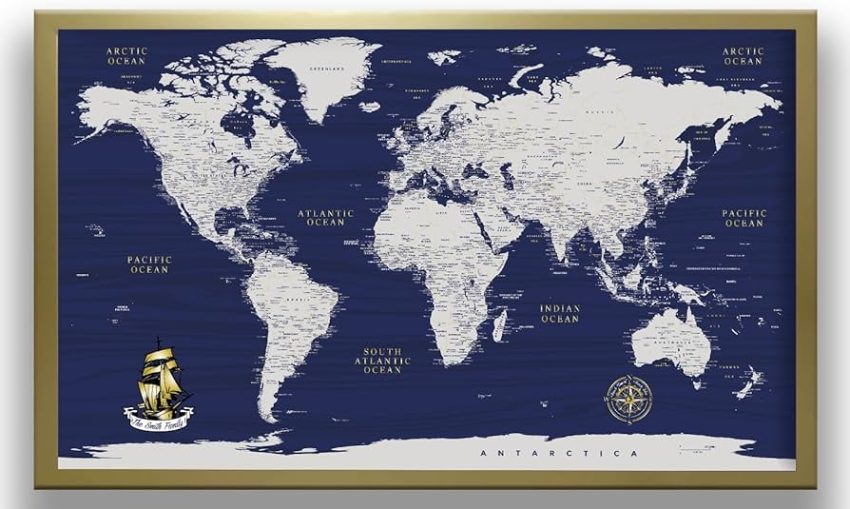
If you love collecting boarding passes, photos, and little souvenirs, a map print is a clean way to keep those memories visible without filling shelves. A personalized city poster can mark the streets you walked, the neighborhood you stayed in, or the route you took from one landmark to another. When you group several pieces together, you get a gallery wall that feels personal, organized, and easy to update over time.
This guide walks you through choosing a map style, adding meaningful details, planning a layout, and placing your set in different rooms. You will also learn when a canvas print is the right fit and when a poster print makes more sense.
Why map prints work so well for travelers
Trips become part of your everyday space
Travel photos often stay on a phone. Map wall art brings a trip into daily life in a quieter, more design-friendly way. Instead of one large photo that dominates the room, a map print can sit naturally among other wall decor and still hold strong meaning.
A gallery wall can tell a clear story
A single art print can highlight one place you love. A set can show your timeline: a first trip, a return visit, a move, or a shared journey. Because maps share a similar structure (lines, labels, blocks), they look cohesive even when each print represents a different experience.
Room decor that is easy to refresh
Map posters are simple to add, swap, or expand. Start with two or three prints, then add more as you travel again. This approach keeps your wall hangings current without redoing the whole space.
Choose a map look that stays consistent
Minimal line maps vs. detailed street maps
Minimal line maps focus on shape and route. They work well in smaller rooms or near other artwork because they feel light. Detailed street maps show more blocks and labels and can look best when you keep the rest of the wall calm.
Pick a color approach that fits your room
For a clean gallery wall, choose one of these directions and stick with it across the set:
- Neutral maps with black lines and soft backgrounds for a calm, balanced look.
- High-contrast maps for a bold statement on a large wall art section.
- Soft tone maps that match furniture wood, rugs, and textiles.
Pair maps with supporting wall art
If your wall needs more variety than maps alone, add one supporting piece that shares the same tone. For example, a simple abstract print can add shape and motion without competing with map details. You can browse Abstract Art Prints to find a piece that fits between two map prints.
If your space leans toward outdoor themes, a nature scene can balance city lines with softer forms. A well-chosen landscape works nicely as the center anchor in a travel wall, with maps around it. Explore Nature Wall Art for supporting options.
Personalization options that feel meaningful
Add details that matter to you
A personalized city poster does not need to include a full address or long text. A few small choices can make the print feel truly yours. Here are strong options that work well for canvas art and poster print formats:
- Coordinates of a meaningful spot (a meeting place, a favorite view, a first walk).
- Date of the trip, move, or event.
- Short caption like “Our first weekend,” “New chapter,” or “Always back here.”
- Route line that marks a walk from one point to another.
- Neighborhood label (kept short and clean).
Keep typography consistent across the set
If you are building a gallery wall, use the same font, spacing, and caption placement for every print. Consistency is what makes multiple art prints look like one planned collection instead of separate purchases.
Plan your gallery wall layout
Choose one of three layouts
These layouts work well for travel map wall prints and are easy to repeat as your set grows:
- Grid layout: same size prints in neat rows. Great for a clean look in a home office.
- Salon layout: mixed sizes with a planned center. Great for a living room feature wall.
- Triptych: three prints in a row. Great above a sofa, bed, or console.
Use a simple measuring method
Before you hang anything, outline each piece with painter’s tape on the wall. Step back, check spacing, and adjust until the set feels balanced. This method saves time and reduces extra holes.
Mix sizes the right way
If you want a large wall art anchor, choose one main canvas print first, then add smaller art prints around it. The anchor can be a detailed map, a route-based print, or a supporting wall art piece.
Room-by-room placement ideas
For Living Room
A travel gallery wall in the living room works best on the main wall you see from the seating area. Use one larger wall print as the center and build outward. Keep the lowest edge of the set at a comfortable eye level when seated.
For Bedroom
In the bedroom, keep map prints simpler and lighter. A triptych above a dresser or a small grid above a desk corner can add personality without feeling busy. If you hang above the bed, keep enough space between the headboard and the bottom of the art.
For Hallway and Entryway
Hallways are ideal for a timeline wall: a series of map posters placed in a single line. In an entryway, a compact set near a console table works well and creates a welcoming first impression.
For Home Office / for Office
Choose a clean grid of maps for a focused workspace. Maps sit well with functional room decor like shelves, lamps, and cabinets. If you want one statement piece, place it behind the chair as your backdrop.
For Apartment or for Studio
Small spaces benefit from fewer, larger pieces rather than many tiny prints. One strong canvas art piece plus two smaller wall prints can feel complete without crowding the room.
Canvas print vs. poster print: what to pick
When canvas art is the better match
A canvas print can look finished without a frame and can feel substantial on larger walls. Artesty canvas prints are made on natural canvas with quality ink and are hand-stretched on wood, which makes them a strong choice for a main wall art position.
When poster print works best
A poster print can be a smart option if you like changing your wall decor often or if you want to test a layout before committing to a larger canvas. Posters also make it easy to build a large set over time.
Size guide for map wall prints
Start with your focal piece
Pick one main piece first. Then choose supporting pieces that keep the same map style and text placement.
- Large walls: one large wall art anchor plus 4–8 supporting prints.
- Medium walls: one main canvas print plus 2–4 supporting prints.
- Small walls: a triptych or a tight 2×2 grid.
Avoid the “too small” look
If your wall is wide, small prints can get lost. Either increase print sizes or group them closer together. A tighter arrangement often looks better than spreading pieces too far apart.
Care and upkeep basics
Choose the right spot
Hang wall art away from direct sun for long periods, strong heat sources, and high humidity areas. This helps prints look their best over time.
Keep it simple
Dust lightly with a soft, dry cloth. Avoid spraying cleaners directly on a canvas print or poster surface.
Gift ideas for travelers
Great moments to mark with a map print
Map wall art makes a thoughtful gift when you want meaning without guessing someone’s style. It works well for graduations, anniversaries, housewarmings, and “first place together” milestones.
What to collect for personalization
To order the right piece, you usually only need the city name for the map source, a date, and a short caption. If you want to add coordinates, ask for a favorite spot or use a meaningful meeting point.
Shop the look on Artesty
If you want a ready starting point, begin with a travel-focused set and then add a supporting print to complete the wall. Browse Traveling Around Canvas Prints for travel-themed wall art that fits naturally with map posters.
If you prefer to explore first and build your own mix, you can also visit our shop and choose a style that matches your home.
FAQ
What information do I need to personalize a map print?
Start with the city, then add a date and a short caption. Coordinates are optional but can add a personal touch.
How many prints do I need for a gallery wall?
Most walls look balanced with 3–9 pieces, depending on wall size and print size. Start small and expand as you travel.
What is the easiest layout for beginners?
A three-piece row (triptych) is the easiest to measure and hang. A simple 2×2 grid is also beginner-friendly.